The Prototype
Driving prototype · 2025
All carsWhy we built a prototype
2022
Starting from zero
DCU Solar Racing began as an idea among DCU engineering students. None of us had built a solar car, or any car, and Ireland had never had one, so there was no one else to ask.
We were honest about that from the start: a race car would be our first car, and first cars go wrong.
Steering and suspension
We started with the design of the steering and suspension, the parts that decide how a car holds the road.
2024
Build small first
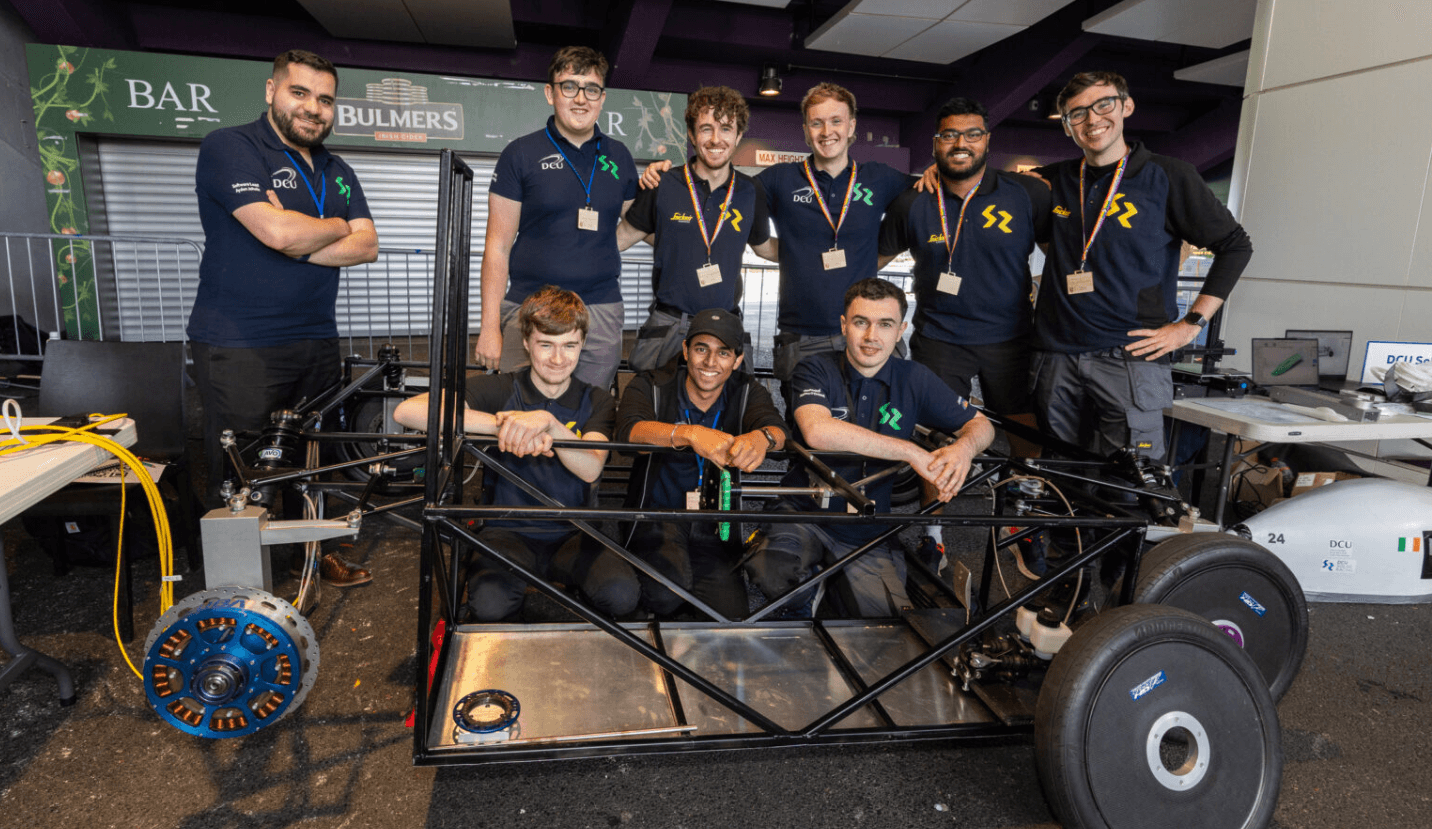
So we began small, we put together the knowledge we knew, built a frame, built the suspension and created something that could roll.
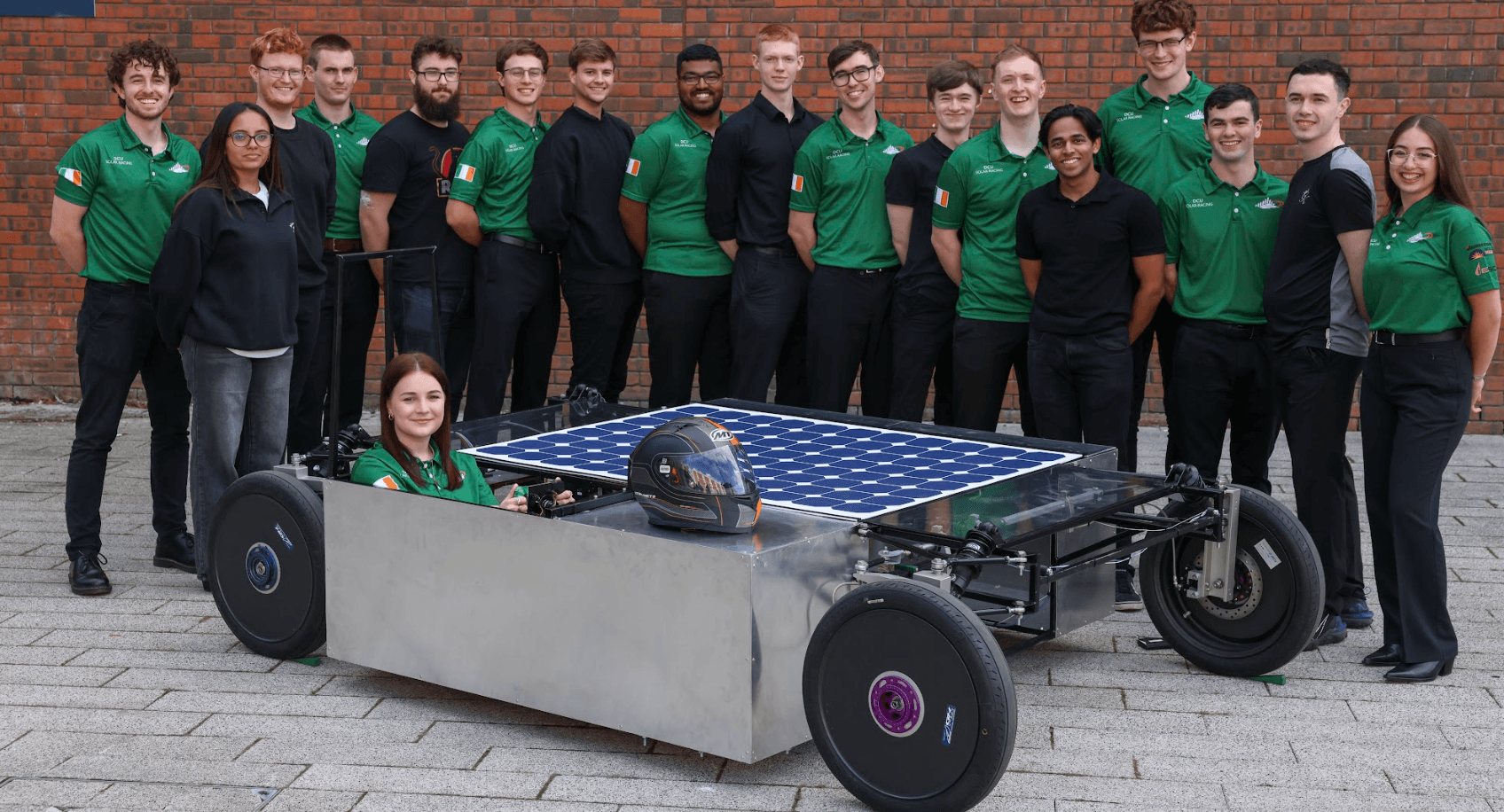
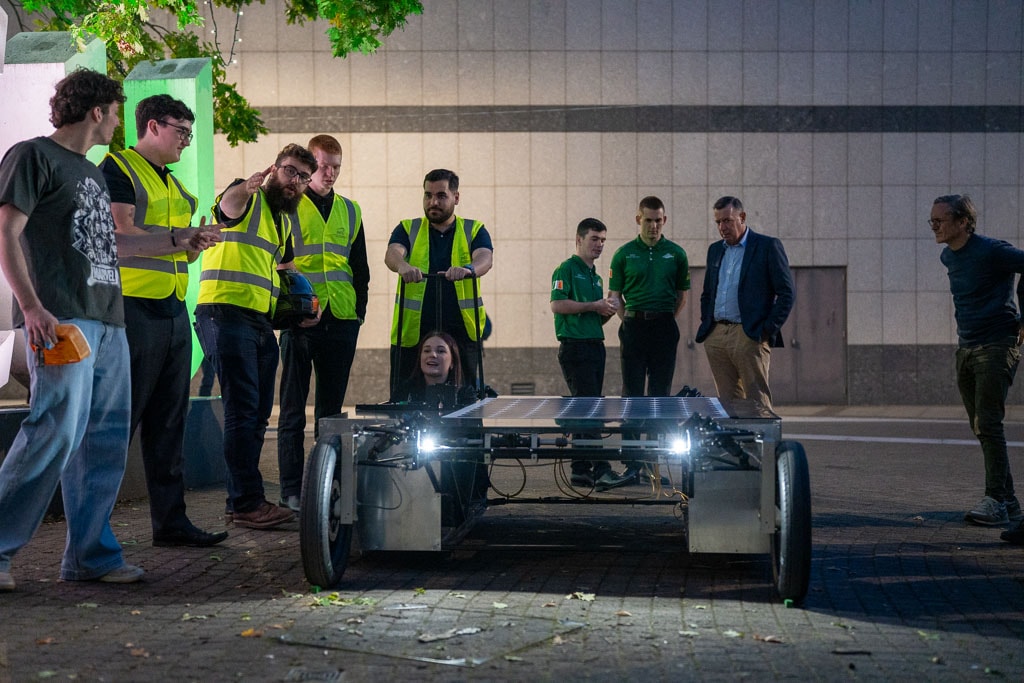
In October 2024 we showed this early work and showcased it at DCU, the team gained support for the project.
The brakes
We made the brakes and tested them on the ground with the car rolling. A car has to stop before it can be trusted to go.
2025
The first drive
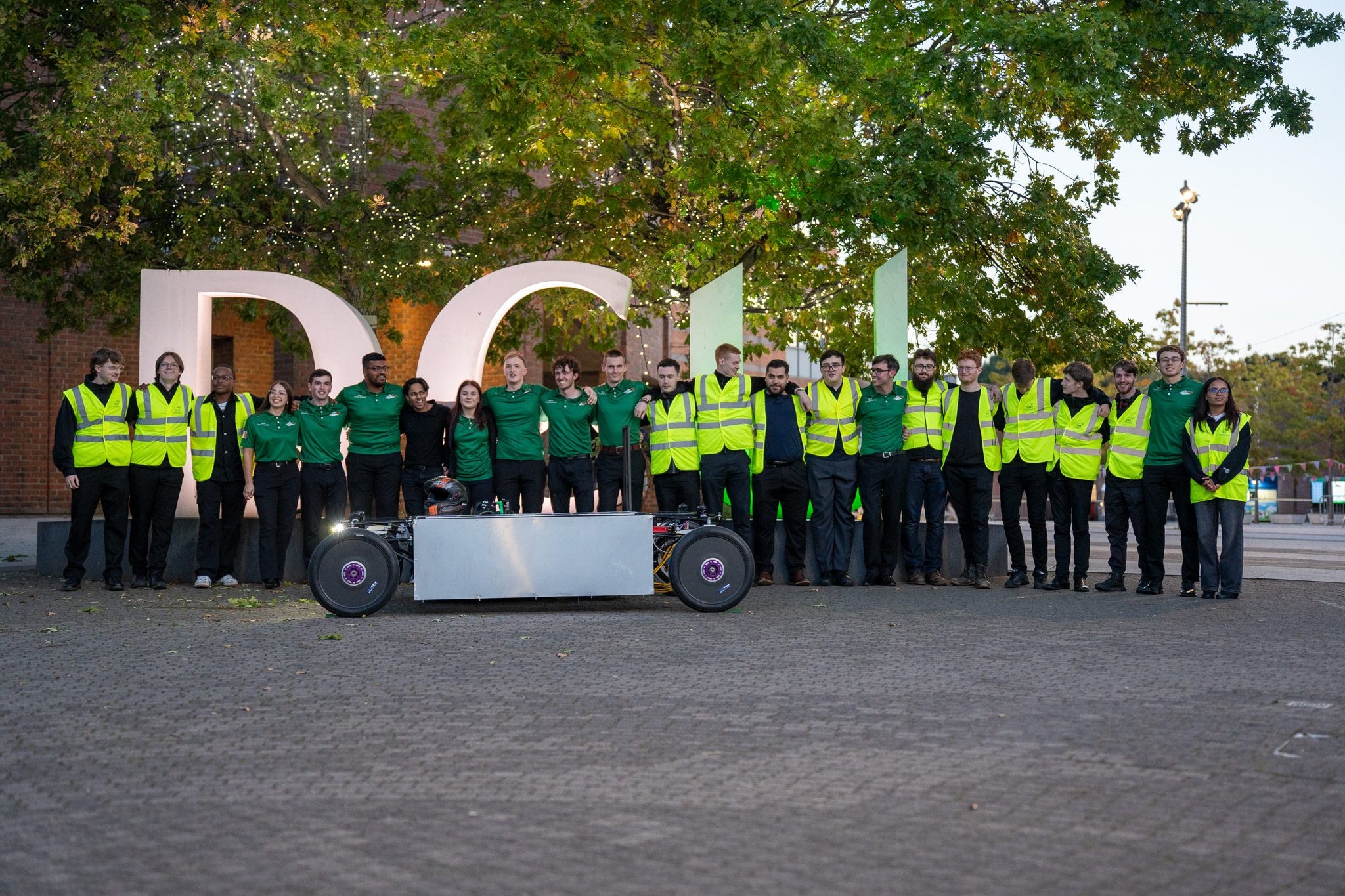
In September 2025 the prototype drove on campus under its own power, the first car we had built to do so.
Every drive showed us something a drawing could not: how the parts fit together, what broke, and what we would build differently.
Battery and motor
Adding the battery pack and the hub motor let the car drive under its own power. Each of these steps was a step towards Solas.
2026
Into Solas
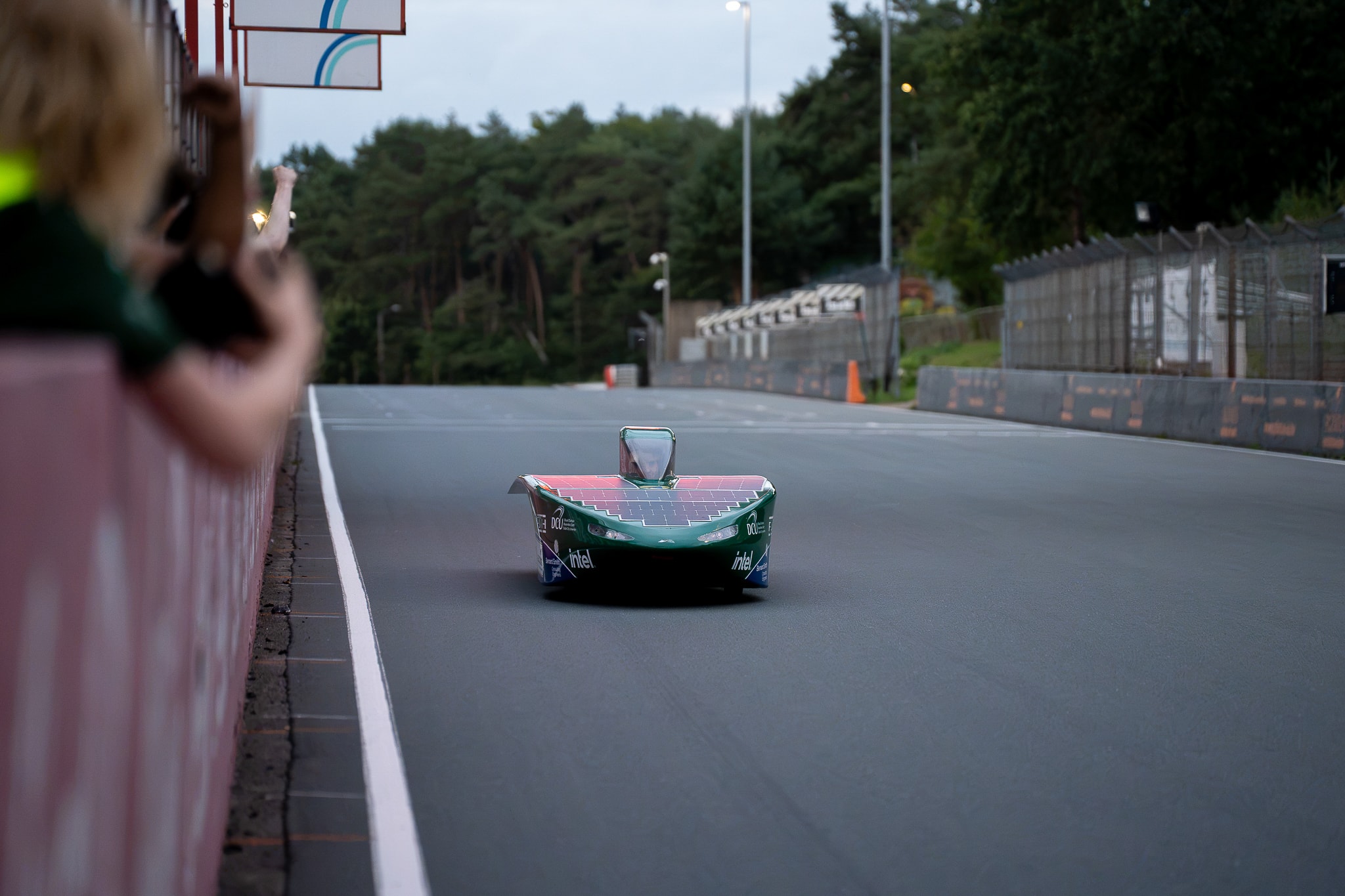
What we learned went straight into Solas, our race car. A year after the prototype’s first drive, Solas ran the full 24 hours at Circuit Zolder.
Every lesson, integrated
Solas brought together everything we learned on the prototype: the steering, suspension, brakes, battery and motor, integrated in one race car.
0
Experience
We started from nothing, so we built small first and learned on every drive.
4
Systems proven
Motor and battery, steering, brakes and the driver display, each on a car that drove.
2025
First drive
The first car we built to move under its own power, on the DCU campus in September.
1year
From first drive to Zolder
Twelve months later, Solas finished the full 24 hours at Circuit Zolder.
The prototype, sketched
- Motor & battery
- Steering & suspension
- Brakes
- Driver display
Motor and battery
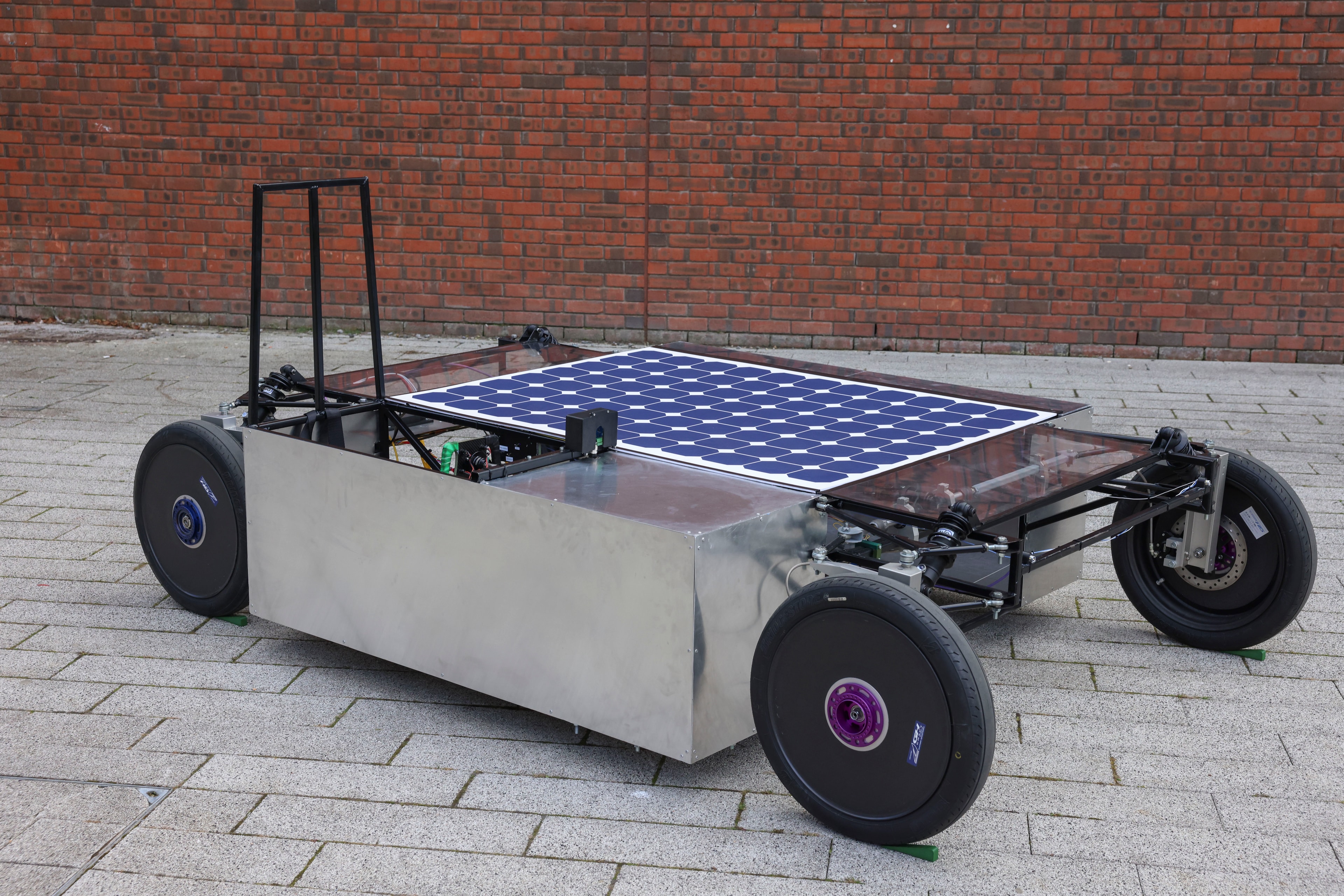
Our first hub motor, run from our own battery pack. The prototype showed us how to get power from the pack to the wheel safely, and what the electrical system in Solas would need.
The catamaran frame
Two aluminium side pods joined across the middle made a frame that was quick to build and easy to change. Driving it taught us why a single bullet-shaped body suited us better, and that is the shape Solas took.
Four wheels
The prototype ran on four wheels, steered at the front. Testing it showed us how a four-wheel layout handled, steered and braked on real ground before we settled the race car’s layout.
Built to fail
The prototype was a platform we were free to break. We could try an idea, see how it really worked and change it, with no risk to the final car. That is a big part of why Solas, our first race car, turned out so much better.